
Olive Leaf Extract
Standardised for oleuropein. Vascular trial evidence; cognition data comes mainly from dietary-pattern research.
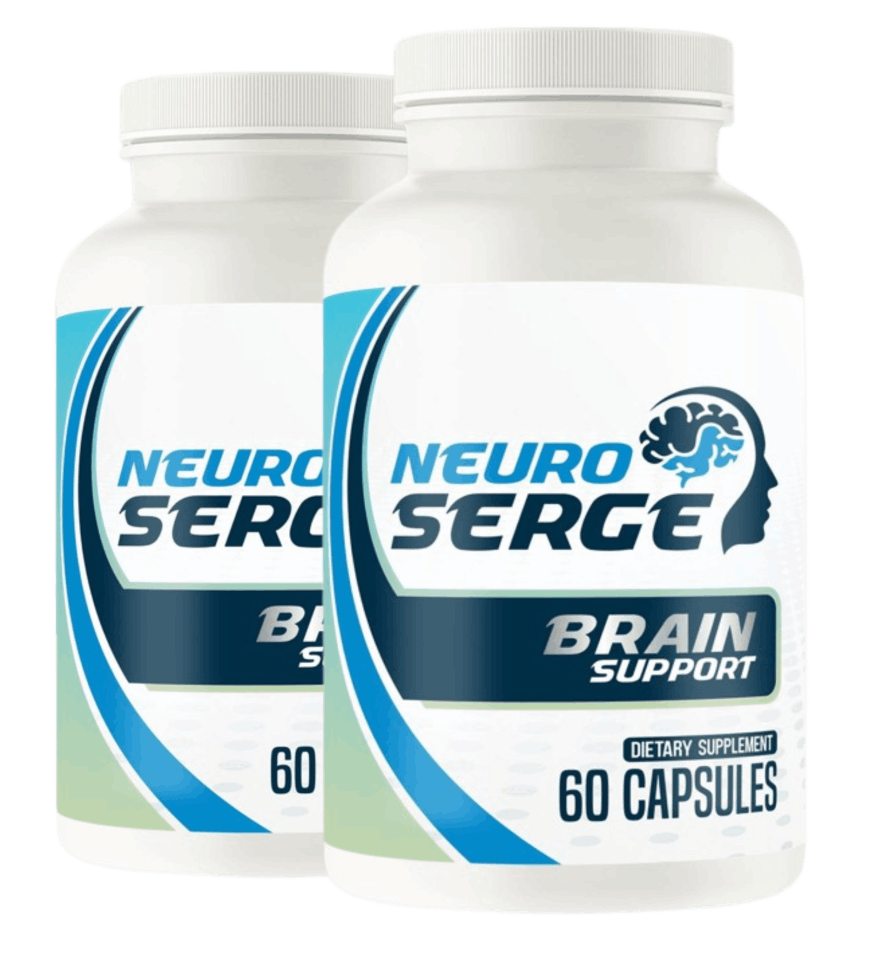
Yes, in the sense that it is a dietary supplement marketed for brain support. The label reads "Brain Support · Dietary Supplement · 60 Capsules", and the formula is built from polyphenol-rich botanical extracts rather than stimulants or pharmaceutical compounds. "Brain supplement" is a marketing category, not a regulatory one — it describes what a product is sold for, not what it has been shown to do.
This page looks at Neuro Serge through the lens of its category: what a brain supplement actually is, what the category can and cannot deliver, and where this particular formula sits within it. For the ingredient detail see the ingredients guide; for the underlying physiology see how Neuro Serge supports cognitive function.
Neuro Serge is a capsule product in what the industry calls the botanical nootropic category: supplements built around plant extracts and sold for everyday cognitive wellness rather than for any diagnosed condition. Each bottle contains 60 capsules. The package structure — two bottles as a 60-day supply, three as 90 days, six as 180 days — places one bottle at 30 days and corresponds to a two-capsule daily serving.
It is worth being precise about the category label. "Brain supplement" has no legal definition. It is not a class the FDA recognises, tests or approves. A product enters the category by being marketed there, which means the label tells you the manufacturer's intent and nothing about demonstrated effect.
Within that category, products tend to fall into recognisable groups: stimulant-based formulas built on caffeine and related compounds; single-ingredient products at disclosed doses; nutrient formulas built on vitamins and minerals; and multi-botanical blends. Neuro Serge belongs to the last group — the product materials describe a proprietary blend of 20+ plants and nutrients and state that the formula contains no stimulants.
Cognitive function is not one capacity. Researchers separate several that move independently of one another, which is why a blanket claim to "improve brain function" carries so little information.
Layered on top of all of them are factors that are not cognitive at all: sleep, stress load, illness, mood, hydration and medication. This is why single-cause explanations for feeling mentally dull are usually wrong, and why the honest ceiling on any supplement in this category is modest.
The brain also depends on continuous blood supply — it holds almost no energy reserve, and flow is actively matched to local activity. Disruption of that coupling is studied in vascular ageing and cognitive decline [8], which is the physiological reason circulation appears so often in brain-supplement marketing.
Marketing positioning
The product is marketed around focus and sustained attention, everyday memory support, and the subjective experience of mental clarity, with supporting themes of brain circulation and antioxidant activity from plant polyphenols. Package supply lengths and the recommendation to use it consistently for three to six months frame it as a daily routine product rather than something with an acute effect.
Those are marketing categories, not demonstrated outcomes. Under US rules a supplement may be described as supporting normal structure or function; it may not be presented as treating a disease. Neuro Serge is not marketed as a treatment for Alzheimer's disease, dementia, Parkinson's disease, stroke, depression, anxiety or ADHD, and nothing on this page should be read that way.
A useful distinction when reading any brain supplement page: structure/function language ("supports memory") describes intent, while disease language ("treats memory loss") would be a drug claim. Products that drift into the second category are making claims their evidence cannot carry.
Six are named: olive leaf extract, Cinnamomum cassia, deglycyrrhizinated licorice, green tea extract, grape seed extract and bilberry extract. All six are polyphenol-rich plant extracts. No individual amount is published, and the rest of the stated 20+ blend is not identified.
Standardised for oleuropein. Vascular trial evidence; cognition data comes mainly from dietary-pattern research.

Cassia cinnamon bark. Strong metabolic meta-analyses; cognitive work is preclinical.

Glycyrrhizin largely removed as a safety measure. Its main literature concerns safety, not cognition.

Rich in catechins. The most direct human cognitive research of the six — and a liver-safety caveat.
Oligomeric proanthocyanidins. Vascular meta-analyses plus one dedicated cognitive trial.
Anthocyanin-rich. Compound-class cognitive meta-analyses; its own strongest data concerns the eye.
Each ingredient is covered in full, with citations and safety notes, on the Neuro Serge ingredients page.
Some of the named botanicals have been studied against cognitive endpoints in humans; others have not. The difference is worth laying out, because a brain supplement is only as relevant as the research connecting its contents to the brain.
Green tea extract has the most direct evidence: a meta-analysis of green tea consumption and cognitive function [1] and a controlled neuroimaging study reporting altered parieto-frontal connectivity during a working-memory task [2].
Grape seed extract has a placebo-controlled cognitive trial in healthy young adults [3] — rarer than it sounds, since most ingredients in this category have no dedicated cognitive trial at all — alongside vascular meta-analyses [5].
Anthocyanins, the compound class in bilberry, have been meta-analysed for cognitive outcomes across healthy and cognitively impaired adults [4].
Cinnamon's robust human evidence is metabolic rather than cognitive [6], and deglycyrrhizinated licorice has no human cognitive trial supporting it.
Pooled analyses of polyphenol trials against cognitive and neurodegenerative outcomes exist [7], and read considerably more cautiously than supplement marketing does.
These three words carry most of the marketing weight in this category, so it is worth separating what each would actually require.
Everyday memory complaints are usually retrieval problems — the name on the tip of your tongue — rather than failures to store information. They are common at every age and are not in themselves a sign of disease. Demonstrating that a supplement improves memory would require testing memory, in people, against placebo. That has not been done for this product.
What people call focus is sustained attention, and it is strongly affected by sleep, interruption and task difficulty. It is also the capacity most reliably shifted by caffeine — relevant context when reading acute trials of tea constituents, since the effect is often attributable to caffeine and L-theanine rather than to catechins.
Neither "mental clarity" nor "brain fog" is a clinical term. They describe how thinking feels. Because they are descriptions rather than diagnoses, they cannot be measured directly, which makes them convenient marketing targets and poor evidence targets.
What it can tell us: that several of the named ingredients are genuinely studied plants; that green tea and grape seed have human cognitive data; that polyphenols as a class have a real literature in vascular and redox biology; and that the formulator chose ingredients with some plausible connection to the marketed purpose rather than at random.
What it cannot tell us: whether this product does anything. Three gaps stand between the research and the bottle. The studies tested single ingredients; this is a blend. The studies used disclosed doses; this product publishes none, and researchers examining supplement labelling have made the point that undisclosed blend composition limits what anyone can reasonably conclude [11]. And no published trial has tested the finished Neuro Serge formulation against any outcome.
The rule that matters: research on an individual ingredient is not clinical evidence that a finished formula containing an undisclosed amount of it produces the same effect. Ingredient evidence is context for a product, never proof of one.
No. Neuro Serge is a dietary supplement, not a prescription medicine. It is not intended to diagnose, treat, cure or prevent any disease, and it is not FDA approved — the FDA does not approve dietary supplements for safety or effectiveness before they are sold, so no supplement can accurately carry that description.
The regulatory distinction is not a technicality. A medicine must demonstrate safety and efficacy for a stated indication before it reaches the market. A dietary supplement does not: the manufacturer is responsible for safety and labelling, and the agency acts after a product is on sale. That difference is exactly why ingredient research cannot be treated as product approval.
A supplement is also not a substitute for prescribed treatment. Do not stop, reduce or delay medication a clinician has prescribed in order to take one.
Plant-derived does not mean risk-free, and two of the named ingredients carry documented considerations. Concentrated green tea extract has a rare but documented association with liver injury; a United States Pharmacopeia review concluded a cautionary statement was warranted [9]. Regular licorice intake is associated with raised blood pressure and lowered potassium [10], which is why the deglycyrrhizinated form is used — though the residual content is undisclosed here.
Speak to a doctor or pharmacist before use if you take any prescription medication, particularly blood-pressure, anticoagulant, antiplatelet or diabetes medicines; have liver disease or another chronic condition; are pregnant, planning pregnancy or breastfeeding; have known plant allergies; or are under 18. Interactions between supplements and prescription medicines in older adults are well documented [12].
If your interest in a brain supplement comes from a genuine, persistent change in memory or thinking, that warrants a clinical assessment first. Many causes — thyroid problems, medication side effects, sleep apnoea, low mood, anaemia — are identifiable and treatable, and none of them is addressed by a capsule.
Yes, in the marketing sense: it is a dietary supplement sold for brain support, with a label reading Brain Support, Dietary Supplement, 60 Capsules. "Brain supplement" is a marketing category rather than a regulatory one, so it describes what a product is sold for, not what it has been shown to do.
A multi-botanical, stimulant-free capsule. The materials describe a proprietary blend of 20+ plants and nutrients built from polyphenol-rich plant extracts, rather than a stimulant formula, a single-ingredient product or a vitamin and mineral blend.
Green tea extract has the most direct human cognitive research, grape seed extract has one dedicated cognitive trial plus vascular meta-analyses, and bilberry contributes anthocyanins, which have been meta-analysed for cognition. Cinnamon and licorice have no human cognitive evidence behind them.
Not demonstrably in this case. Showing that a product improves memory requires testing memory, in people, against placebo. No such trial has been published for the finished Neuro Serge formula, so any memory claim rests on inference from ingredient studies.
No. It is a dietary supplement, not a prescription medicine, and it is not intended to diagnose, treat, cure or prevent any disease. It is not FDA approved, because the FDA does not approve dietary supplements before sale.
The product materials state the formula contains no stimulants. Note that green tea extract may contain caffeine depending on how it is processed, and the caffeine content of this blend is not published. Check the label if that matters to you.
A dietary supplement is regulated as food and is marketed to support normal structure or function. A drug must demonstrate safety and efficacy for a stated medical indication before it can be sold. The two are not interchangeable, and a supplement should never replace prescribed treatment.
Anyone pregnant, planning pregnancy or breastfeeding, anyone under 18, and anyone with liver disease should speak to a clinician first, as should anyone taking blood-pressure, anticoagulant, antiplatelet or diabetes medication.
Neuro Serge is a stimulant-free, multi-botanical brain supplement: 60 capsules per bottle, six named polyphenol-rich plant extracts inside a larger undisclosed blend, marketed for focus, everyday memory support and mental clarity. Within its category that is a coherent and reasonably chosen formula, and the circulation and antioxidant themes it is built on correspond to real physiology.
What the category cannot deliver — and this product is no exception — is proof. "Brain supplement" is a marketing label with no regulatory meaning; the ingredient amounts are not published; and no trial has tested the finished formula. Treat the ingredient research as background rather than as evidence about the bottle, keep expectations proportionate, and put sleep, exercise and a medical assessment ahead of any capsule if everyday cognitive performance is the actual goal.
Scientific Reference Disclaimer: The research cited here provides general educational information about brain health, cognitive function, botanical ingredients, antioxidant activity and circulation. Unless explicitly stated, these studies did not test the finished Neuro Serge product and should not be interpreted as proof of product effectiveness.
Regulatory context: FDA — Dietary Supplements · NIH Office of Dietary Supplements
This page was written and edited by this site's editorial team. It has not been written or reviewed by a doctor, pharmacist, dietitian or other clinical professional, and no such review is claimed. Product facts were taken from the product label and the official product page; scientific citations were located through PubMed and each one was checked against the PubMed record before publication. Where something could not be verified we say so rather than filling the gap.
Nothing here is medical advice.
Last updated: 21 August 2026.