Neuro Serge Supplement – Complete Product Guide
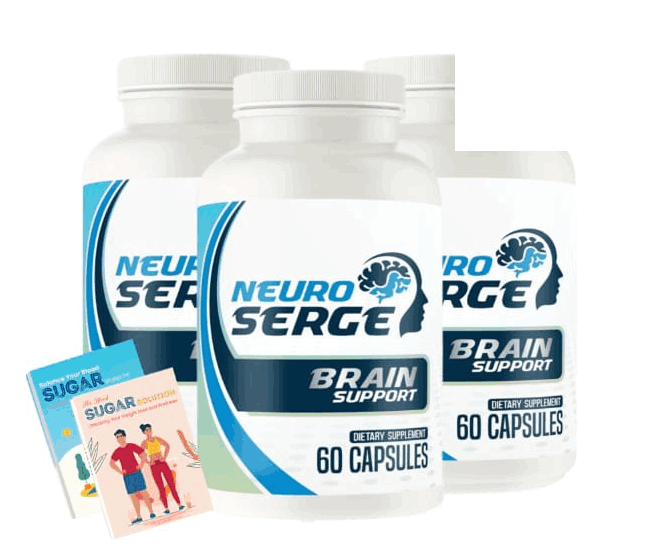
The Neuro Serge supplement is a capsule dietary supplement marketed for brain support, sold in bottles of 60 capsules. The product materials describe a proprietary blend of 20+ plants and nutrients and name six of them. It is regulated as a food-category dietary supplement rather than as a medicine, which shapes both what it may claim and what evidence stands behind it.
This guide covers the product as a supplement: the category it belongs to, how the serving and packaging work, what the label does and does not disclose, and how to evaluate a brain support product properly. For the botanical detail see the ingredients guide; for the category framing see the brain supplement page.
What Is the Neuro Serge Supplement?
Neuro Serge is a dietary supplement in capsule form. The product label carries four pieces of information and no more: the brand name, "Brain Support", "Dietary Supplement" and "60 Capsules". That fourth line is the only quantitative fact printed on the front of the bottle, and it is one of the few product details that can be verified directly rather than taken on trust.
In the United States a dietary supplement is regulated under a food-category framework rather than a drug one. In practice this means three things worth understanding before evaluating any product in this space:
- The manufacturer, not a regulator, is responsible for the safety and labelling of the product.
- Products are not approved for safety or effectiveness before sale. No dietary supplement can accurately be described as FDA approved, and any page saying otherwise is wrong regardless of who publishes it.
- Claims must be limited to supporting normal structure or function. A product presented as treating, curing or preventing a disease would be making a drug claim.
Neuro Serge sits squarely inside that framework: it is sold for general cognitive wellness, not for any diagnosed condition.
What Is Neuro Serge Used For?
It is marketed as a daily supplement for people who want support with focus, everyday memory and mental clarity. Supporting themes in the product materials are circulation to the brain and antioxidant activity from plant polyphenols. These describe how the product is positioned, not outcomes that have been demonstrated.
The distinction is worth holding on to throughout this page. A supplement may lawfully be described as supporting a normal body function; that is a statement of intent by the company selling it. It is a different category of statement from "this has been shown to work", and only the second requires evidence.
What Neuro Serge is not marketed for: it is not presented as a treatment for Alzheimer's disease, dementia, Parkinson's disease, stroke, depression, anxiety or ADHD, and it is not a substitute for prescribed medication. A persistent change in memory or thinking warrants a clinical assessment rather than a supplement, because many causes — thyroid problems, medication side effects, sleep apnoea, low mood — are identifiable and treatable.
Neuro Serge Formula
The formula is sold as a proprietary blend described as containing more than twenty plants and nutrients. Six components are named publicly; the remainder are not identified anywhere we could verify.
A proprietary blend lists several ingredients on a Supplement Facts panel under a single combined weight rather than individually. It is legal and common. Its consequence for a buyer is precise: you can see what is in the product, but not how much of anything. Analysts examining supplement labelling have made the point directly — undisclosed blend composition limits what consumers and clinicians can reasonably conclude about a product [1].
What that means in practice. Almost all the research behind these ingredients used defined, published doses. Without amounts, that research cannot be mapped onto this formula. An ingredient present at a token quantity is chemically identical to the same ingredient at a studied dose and functionally different — and nothing published lets you tell which you are buying.
Refer to the current Supplement Facts label on the bottle you receive for the complete ingredient list and the latest amounts. That panel is the authoritative document; a sales page is not.
Neuro Serge Ingredients
The six ingredients named in the product materials are all polyphenol-rich botanical extracts:
| Ingredient | Type of human evidence |
|---|---|
| Green tea extract | Most direct cognitive research of the six [2] |
| Grape seed extract | One cognitive trial [3] plus vascular meta-analyses [5] |
| Bilberry extract | Anthocyanins meta-analysed for cognition [4] |
| Olive leaf extract | Randomised trials against cardiovascular markers |
| Cinnamomum cassia | Metabolic meta-analyses [6]; cognition work is preclinical |
| Deglycyrrhizinated licorice | Principally a safety literature |
The full treatment of each — what it is, why it appears, what has been studied and where the evidence stops — is on the Neuro Serge ingredients page.
Capsules & Serving Information
Each bottle contains 60 capsules. The packages are sold as 60-, 90- and 180-day supplies for two, three and six bottles respectively, which places one bottle at 30 days and corresponds to a two-capsule daily serving. The written instruction in the product materials is simply to take the capsules with water.
Here is exactly how far that can be verified, because the distinction matters. The 60-capsule count is printed on the label — verified. The package supply lengths are stated on the order page — verified. The two-capsule daily serving is derived from those two facts rather than published as a serving size, so treat it as arithmetic rather than as a label instruction.
Follow the directions printed on the Supplement Facts panel of the bottle you receive. If the label and any website disagree, the label governs. Taking capsules with food and a full glass of water is sensible general practice with concentrated botanical extracts, and exceeding a labelled serving does not accelerate results while it can increase risk.
Potential Benefits
Three categories of statement get blurred together in this market. Separating them is the single most useful thing a reader can do.
Verified product facts
60 capsules per bottle. Six named botanical ingredients. Packages equating to 60, 90 and 180 days. A stated
180-day money-back guarantee. Manufactured, per the official wording, "in the USA from the finest of foreign
and domestic ingredients" — which is notably not a claim that the ingredients are US-sourced.
Marketing positioning
Support for focus, everyday memory, mental clarity, brain circulation and antioxidant activity; the "20+ plants
and nutrients" description; the statement that the formula contains no stimulants. These are claims made by the
company about its own product.
Ingredient-level research
Real published work exists on several of the named plants, summarised above and cited in full on the
ingredients page. It describes those ingredients at disclosed doses in defined populations.
Not supported
Any claim that the product is clinically proven, doctor approved, FDA approved or GMP certified; any claim that
it treats or prevents a neurological or psychiatric condition; any guaranteed improvement in memory or
cognitive performance.
No published trial has tested the finished Neuro Serge formulation. Ingredient research is context for a product, never proof of one.
Safety
Plant-derived does not mean risk-free. Two of the named ingredients carry documented considerations that are worth knowing before ordering.
Concentrated green tea extract has a rare but documented association with liver injury. A United States Pharmacopeia review of case reports concluded a cautionary statement was warranted [7]. Do not exceed the labelled serving, take it with food, and seek medical advice if you develop unusual fatigue, abdominal pain, dark urine or yellowing of the skin or eyes.
Licorice in its ordinary form is associated with raised blood pressure and lowered potassium [8]. The deglycyrrhizinated form used here is specifically processed to reduce that risk, though the residual content is not disclosed.
Speak to a doctor or pharmacist before use if you take any prescription medication — interactions between supplements and prescription medicines are well documented, including with warfarin [9] and more broadly in older adults [10] — or if you have liver disease or another chronic condition, are pregnant, planning pregnancy or breastfeeding, have known plant allergies, or are under 18. Because the full formula is undisclosed, neither you nor a pharmacist can completely screen this product against a specific allergy or medicine.
How to Evaluate a Brain Support Supplement
This applies well beyond one product. If you are comparing brain supplements, these are the questions that actually separate them — and most of them can be answered in a couple of minutes on a sales page.
- Is the full ingredient list published? If not, nothing else can be assessed. A page that promotes "science-backed ingredients" without naming them is asking you to buy on trust alone.
- Are individual amounts disclosed? A proprietary blend tells you what is present but not how much, which means published research cannot be mapped onto the product.
- Does the research cited actually concern cognition? Vascular and metabolic endpoints are frequently presented as if they were cognitive findings. They are not.
- Was the finished product tested, or only its ingredients? This is the single biggest distinction in the category, and very few products in it can answer "yes".
- Are regulatory claims accurate? "FDA approved" is inaccurate for any supplement. "FDA registered" describes an administrative filing, not an endorsement.
- Are certifications verifiable? A GMP or third-party testing claim should name the body or publish a certificate. If it cannot be checked, treat it as an assertion.
- Is the refund window long enough to matter? Compare it against the seller's own suggested course length — if the course outlasts the guarantee, the guarantee protects less than it appears to.
- What do the reviews consist of? Seller-published testimonials are marketing; independent reviews are something else. See Neuro Serge reviews for how to tell them apart.
Applied to Neuro Serge, that checklist produces a mixed result: ingredients partly published, amounts not published, research real but ingredient-level, no finished-product trial, no verifiable certification, and an unusually long 180-day refund window.
Frequently Asked Questions
What is the Neuro Serge supplement?
A capsule dietary supplement marketed for brain support, sold in bottles of 60 capsules. The materials describe a proprietary blend of 20+ plants and nutrients and name six of them. It is regulated as a dietary supplement, not as a medicine.
What is Neuro Serge used for?
It is marketed for focus, everyday memory support and mental clarity, with supporting themes of brain circulation and antioxidant activity. Those describe how the product is positioned rather than outcomes that have been demonstrated.
How many capsules are in a bottle of Neuro Serge?
60 capsules per bottle, printed on the label. Package supply lengths treat one bottle as a 30-day supply, which corresponds to a two-capsule daily serving.
What is the Neuro Serge formula?
A proprietary blend described as containing more than twenty plants and nutrients, of which six are named: olive leaf, Cinnamomum cassia, deglycyrrhizinated licorice, green tea extract, grape seed extract and bilberry extract. No individual amounts are published.
Is Neuro Serge FDA approved?
No. The FDA does not approve dietary supplements for safety or effectiveness before they are sold, so no supplement can accurately be described as FDA approved. We also found no verifiable documentation of GMP certification or third-party testing for this product.
How should the Neuro Serge supplement be taken?
The written instruction is to take the capsules with water. Follow the directions printed on the Supplement Facts panel of the bottle you receive — if the label and a website disagree, the label governs.
Is Neuro Serge safe to take long term?
No long-term safety data exists for the finished product. Ingredient-level considerations do exist, particularly for concentrated green tea extract and licorice. Anyone taking medication or managing a health condition should speak to a doctor or pharmacist before starting and before continuing long term.
Can Neuro Serge replace prescription medication?
No. A dietary supplement is not a substitute for prescribed treatment. Do not stop, reduce or delay medication a clinician has prescribed in order to take it.
Final Summary
As a supplement, Neuro Serge is straightforward to describe: 60 capsules per bottle, a two-capsule daily serving implied by the package supply lengths, six named polyphenol-rich botanicals inside a proprietary blend described as 20+ plants and nutrients, and a stated 180-day money-back guarantee. It is regulated as a dietary supplement, which means it was never approved for safety or effectiveness before sale — that is normal for the category, not a criticism unique to this product.
Where it is weaker than it could be is disclosure. Amounts are not published, most of the blend is never identified, and no trial has tested the finished formula. Judged against the evaluation checklist above, the honest result is mixed: a defensible ingredient selection, an unusually long refund window, and a formula you cannot actually verify. Read the Supplement Facts panel when the bottle arrives, check the named ingredients against your own medications, and keep expectations proportionate to what is genuinely known.
Scientific References
Scientific Reference Disclaimer: The research cited here provides general educational information about brain health, cognitive function, botanical ingredients, antioxidant activity and circulation. Unless explicitly stated, these studies did not test the finished Neuro Serge product and should not be interpreted as proof of product effectiveness.
- Saldanha LG, Dwyer JT, Hardy CJ, et al. Perspectives on the Use of Proprietary Blends in Dietary Supplements. J Nutr. 2023. PubMed 37004873
- Zhou S, Zhu Y, Ren N, et al. The Association between Green Tea Consumption and Cognitive Function: A Meta-Analysis of Current Evidence. Neuroepidemiology. 2026. PubMed 39947165
- Bell L, Whyte AR, Lamport DJ, et al. Grape seed polyphenol extract and cognitive function in healthy young adults: a randomised, placebo-controlled, parallel-groups acute-on-chronic trial. Nutr Neurosci. 2022. PubMed 31942838
- Lorzadeh E, Weston-Green K, Roodenrys S, et al. The Effect of Anthocyanins on Cognition: A Systematic Review and Meta-analysis of Randomized Clinical Trial Studies in Cognitively Impaired and Healthy Adults. Curr Nutr Rep. 2025. PubMed 39875765
- Foshati S, Nouripour F, Sadeghi E, et al. The effect of grape (Vitis vinifera) seed extract supplementation on flow-mediated dilation, blood pressure, and heart rate: a systematic review and meta-analysis of controlled trials. Pharmacol Res. 2022. PubMed 34798267
- Moridpour AH, Kavyani Z, Khosravi S, et al. The effect of cinnamon supplementation on glycemic control in patients with type 2 diabetes mellitus: an updated systematic review and dose-response meta-analysis of randomized controlled trials. Phytother Res. 2024. PubMed 37818728
- Oketch-Rabah HA, Roe AL, Rider CV, et al. United States Pharmacopeia (USP) comprehensive review of the hepatotoxicity of green tea extracts. Toxicol Rep. 2020. PubMed 32140423
- Penninkilampi R, Eslick EM, Eslick GD. The association between consistent licorice ingestion, hypertension and hypokalaemia: a systematic review and meta-analysis. J Hum Hypertens. 2017. PubMed 28660884
- Tan CSS, Lee SWH. Warfarin and food, herbal or dietary supplement interactions: a systematic review. Br J Clin Pharmacol. 2021. PubMed 32478963
- Changaramkumarath G, Abucha JM, Wollel MM, et al. Pharmacological Interactions Between Nutritional Supplements and Prescription Medications in Older Adults: A Comprehensive Review. Cureus. 2025. PubMed 41103884
Regulatory context: FDA — Dietary Supplements · NIH Office of Dietary Supplements
About This Information
This page was written and edited by this site's editorial team. It has not been written or reviewed by a doctor, pharmacist, dietitian or other clinical professional, and no such review is claimed. Product facts were taken from the product label and the official product page; scientific citations were located through PubMed and each one was checked against the PubMed record before publication. Where something could not be verified we say so rather than filling the gap.
Nothing here is medical advice.
Last updated: 21 August 2026.