Neuro Serge Ingredients – Formula & Ingredient Guide
Six ingredients are named in the Neuro Serge product materials: olive leaf extract, Cinnamomum cassia (cinnamon bark), deglycyrrhizinated licorice (DGL), green tea extract, grape seed extract and bilberry extract. The formula is sold as a proprietary blend described as "20+ plants and nutrients", so the remainder of the composition and every individual amount are undisclosed. Refer to the current Supplement Facts label for the latest ingredient amounts.
This is the ingredient reference for the cluster: each named botanical in turn, what researchers have studied, and where the evidence runs out. For the wider product picture start with the Neuro Serge overview; for an evaluation of the formula, read the Neuro Serge review.
Neuro Serge Ingredients at a Glance
| Ingredient | Botanical source | Best-studied compound | Amount disclosed |
|---|---|---|---|
| Olive leaf extract | Olea europaea leaf | Oleuropein | No |
| Cinnamomum cassia | Cassia cinnamon bark | Cinnamaldehyde | No |
| Deglycyrrhizinated licorice | Glycyrrhiza glabra root | Flavonoids; glycyrrhizin largely removed | No |
| Green tea extract | Camellia sinensis leaf | EGCG and other catechins | No |
| Grape seed extract | Vitis vinifera seed | Oligomeric proanthocyanidins | No |
| Bilberry extract | Vaccinium myrtillus fruit | Anthocyanins | No |
One pattern runs through the table: every named ingredient is a polyphenol-rich plant extract, and not one carries a published quantity. That combination shapes everything else on this page.
Complete Neuro Serge Ingredient Information
The label identifies Neuro Serge as a brain support dietary supplement containing 60 capsules, and the official materials describe a proprietary blend of more than twenty plants and nutrients while naming six.
So the list below is complete as far as public disclosure goes — but it is not the complete formula. At least fourteen further components sit behind the "20+" description without being identified. We have not guessed at them, and any site publishing a full twenty-item Neuro Serge ingredient list is working from a source that does not exist publicly.
The authoritative source is the bottle. The Supplement Facts panel on the product you receive is the only document listing the full formula and the amounts actually used. Manufacturers can reformulate without changing a product name, so read that panel on arrival.
Olive Leaf Extract
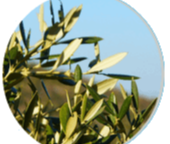
Olive Leaf Extract
Olea europaea- What it is
- An extract of the olive tree's leaf rather than its fruit, usually standardised for oleuropein — the phenolic compound behind the bitterness of extra-virgin olive oil.
- Why it appears
- Listed first in the product materials and associated with heart health and blood-sugar support.
- What has been studied
- Randomised trials of phenolic-rich olive leaf extract against blood pressure, plasma lipids and inflammatory markers [1], plus a systematic review of olive polyphenols across neurodegenerative models and clinical studies [2].
- Where the evidence stops
- The human trials measured cardiovascular markers, not memory or attention, and the review's own conclusion is that translation to clinical benefit remains unresolved.
Cinnamomum Cassia
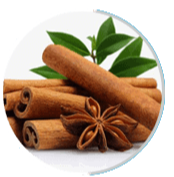
Cinnamomum Cassia
Cassia cinnamon bark- What it is
- Cassia cinnamon — everyday culinary cinnamon, distinct from Ceylon. Its most-studied constituent is cinnamaldehyde; cassia also naturally contains coumarin, which is why intake guidance exists for it.
- Why it appears
- Associated in the product materials with a healthy inflammatory response, heart health and insulin levels.
- What has been studied
- Dose-response meta-analysis of glycaemic control in type 2 diabetes [3]. Work connecting cinnamaldehyde to cognition exists but sits in animal models [4].
- Where the evidence stops
- This is the weakest cognitive case of the six: the strong human evidence is metabolic and was gathered in people with diabetes, saying nothing about memory or focus in anyone else.
Deglycyrrhizinated Licorice (DGL)
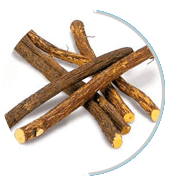
Deglycyrrhizinated Licorice
Glycyrrhiza glabra (DGL)- What it is
- Licorice root extract with most of the glycyrrhizin stripped out. That removal is the whole point of the DGL designation: glycyrrhizin drives licorice's documented effects on blood pressure and potassium.
- Why it appears
- Associated in the product materials with stress management and a healthy inflammatory response.
- What has been studied
- The largest clinical literature on licorice is a safety literature — a meta-analysis linking consistent intake to raised blood pressure and lowered potassium [5], and case reports of pseudohyperaldosteronism from chronic consumption [6].
- Where the evidence stops
- Choosing DGL is a deliberate safety decision by the formulator, but the residual glycyrrhizin content is undisclosed and no human trial supports a cognitive benefit from licorice in any form.
Green Tea Extract
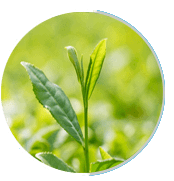
Green Tea Extract
Camellia sinensis- What it is
- Concentrated green tea leaf extract rich in catechins, principally EGCG. Depending on processing it may also carry caffeine and L-theanine.
- Why it appears
- Associated in the product materials with heart health and brain benefit.
- What has been studied
- The most direct cognitive research of the six: a meta-analysis of green tea consumption and cognitive function [7], and a controlled neuroimaging study reporting altered parieto-frontal connectivity during a working-memory task [8].
- Where the evidence stops
- The meta-analysis pools largely observational data, where tea drinking travels with other habits; the neuroimaging study was small, acute and in healthy young volunteers.
- Safety note
- Concentrated extracts carry a documented, rare risk of liver injury — a United States Pharmacopeia review of case reports concluded a cautionary statement was warranted [9].
Grape Seed Extract
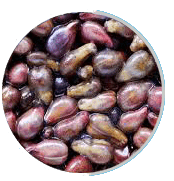
Grape Seed Extract
Vitis vinifera- What it is
- An extract of grape seeds rich in oligomeric proanthocyanidins, a polyphenol class studied chiefly for effects on blood vessels.
- Why it appears
- Associated in the product materials with healthy blood pressure, healthy blood flow and oxidative damage.
- What has been studied
- Meta-analysed randomised trials of blood pressure and flow-mediated dilation [11], plus — unusually for this category — a dedicated placebo-controlled cognitive trial in healthy young adults [10].
- Where the evidence stops
- The vascular pooled effects are small and were not cognitive endpoints; the cognitive trial is a single study in one narrow population. Proanthocyanidin content varies enormously between extracts.
Bilberry Extract
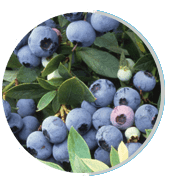
Bilberry Extract
Vaccinium myrtillus- What it is
- An extract of the European blueberry standardised for anthocyanins — the pigments behind the colour of dark berries.
- Why it appears
- Associated in the product materials with vision health, a healthy inflammatory response and blood sugar.
- What has been studied
- Anthocyanins as a compound class have been meta-analysed for cognitive outcomes in healthy and cognitively impaired adults [12].
- Where the evidence stops
- Findings are mixed and modest, and most trials delivered anthocyanins as juices or whole-diet intake rather than as an extract inside a multi-ingredient capsule. Bilberry's own strongest human evidence concerns the eye, not memory.
What Is a Proprietary Blend?
A proprietary blend groups several ingredients on a Supplement Facts panel under one combined weight instead of listing each individually. It is legal and widely used. The consequence for a buyer is specific: you can see what is in the product, but not how much of anything.
Formulators use blends for defensible reasons — protecting a recipe, or avoiding a relabel every time a supplier changes. The trade-off falls on the reader. Analysts examining supplement labelling have made the point directly: undisclosed blend composition limits what consumers and clinicians can reasonably conclude about a product [13].
Here is why it matters more than it sounds. Nearly all the research on this page was conducted at a defined, published dose. If Neuro Serge contains a fraction of those quantities, that research is not informative about it; if it contains comparable amounts, it becomes more relevant. Nothing published lets you tell which — and an ingredient present in a token quantity behaves like one that is not there at all.
Ingredient Dosages
No individual amount is published — not for the six named botanicals, not for the undisclosed remainder. We have therefore published no milligram figure anywhere on this site. Refer to the current Supplement Facts label for the latest ingredient amounts.
We are explicit about this because it is the most common place supplement pages invent information. It is easy to find a plausible research dose for oleuropein or EGCG and present it as though it described the product. That would be fabrication.
What can be stated accurately is the serving structure. Each bottle holds 60 capsules. Packages are sold as 60-, 90- and 180-day supplies for two, three and six bottles, which places one bottle at 30 days and corresponds to a two-capsule daily serving. The written instruction is to take the capsules with water; follow the directions on the panel of the bottle you receive.
What Research Says About the Ingredients
Read together, the literature has a clear shape. Green tea has the most direct human cognitive research. Grape seed and olive leaf have genuine randomised evidence, mostly against vascular endpoints. Anthocyanins have cognitive meta-analyses at compound-class level. Cinnamon's strong evidence is metabolic. Licorice's strongest evidence is about safety.
That is a reasonable foundation for a formula. It is not evidence about a formula. Every step between those two statements is unverified here: from a single ingredient to a blend, from a published dose to an unknown one, and from a trial population to you.
Product-specific evidence status: we found no peer-reviewed randomised controlled trial testing the finished Neuro Serge formulation. Every citation on this page examined an individual ingredient or a general physiological mechanism.
For the physiology behind these ingredients, see how Neuro Serge is positioned for cognitive function.
Ingredient Safety Considerations
Plant-derived does not mean risk-free. Three of the six named ingredients carry specific considerations.
Green tea extract and the liver
Green tea as a beverage has an excellent safety record; concentrated extract is a different exposure [9]. Do not exceed the labelled serving, take it with food, and seek medical advice if you develop unusual fatigue, abdominal pain, dark urine or yellowing of the skin or eyes.
Licorice, blood pressure and potassium
Regular licorice intake is associated with raised blood pressure and lowered potassium [5]. Deglycyrrhizination reduces that risk, but the residual content here is undisclosed — relevant if you have hypertension, heart failure or kidney disease, or take a potassium-affecting medicine.
Cassia cinnamon and coumarin
Cassia naturally contains coumarin, which is why tolerable intake guidance exists. The amount here is undisclosed, so avoid stacking several cinnamon-containing supplements.
Interactions generally
Supplement–medication interactions in older adults are documented in review [14]. Because the full formula is undisclosed, neither you nor a pharmacist can completely screen this product against a specific allergy or medicine — which makes asking first more important here, not less.
Frequently Asked Questions
What ingredients are in Neuro Serge?
Six are named publicly: olive leaf extract, Cinnamomum cassia, deglycyrrhizinated licorice, green tea extract, grape seed extract and bilberry extract. The materials describe a proprietary blend of 20+ plants and nutrients, so the rest is not disclosed.
How many ingredients does Neuro Serge contain?
The materials describe more than twenty plants and nutrients, but only six are identified by name. The exact total and the identity of the remainder are not published anywhere we could verify.
Are the Neuro Serge ingredient amounts published?
No. No individual amount is published for any ingredient, because the formula is sold as a proprietary blend. The quantities cannot be compared against doses used in published research.
Does Neuro Serge contain caffeine?
Not disclosed. Green tea extract may contain caffeine depending on processing, and the materials describe the formula as containing no stimulants. If caffeine sensitivity matters, check the label and contact the brand before ordering.
Why is deglycyrrhizinated licorice used instead of ordinary licorice?
Glycyrrhizin is the compound associated with raised blood pressure and lowered potassium. Deglycyrrhizinated licorice has most of it removed, which is a deliberate safety choice. The residual content of this product is not published.
Do the Neuro Serge ingredients have scientific evidence behind them?
Individually, to varying degrees — green tea has the most direct cognitive research, grape seed and olive leaf have vascular trials, anthocyanins have cognitive meta-analyses. None of it tested the finished product, so it is context rather than proof.
Is Neuro Serge suitable for vegetarians or free from allergens?
We could not verify capsule composition, allergen statements or dietary certifications from the available materials. Check the allergen statement on the bottle and contact the brand if you have a specific allergy.
Final Summary
Neuro Serge names six botanical ingredients. They are real, well-characterised plants, each with a genuine research literature, and several are sensible choices for a formula aimed at cognitive wellness — using the deglycyrrhizinated form of licorice in particular reflects awareness of the safety issue it addresses.
The limitation is equally clear: no amount is published for any of them, most of the stated 20+ blend is never identified, and no trial has tested the finished product. Ingredient research is context for a formula, never proof of one. Read the Supplement Facts panel when your bottle arrives, check the named ingredients against your medications with a pharmacist, and treat any page publishing a confident dosage table for this product as unreliable.
Scientific References
Scientific Reference Disclaimer: The research cited here provides general educational information about brain health, cognitive function, botanical ingredients, antioxidant activity and circulation. Unless explicitly stated, these studies did not test the finished Neuro Serge product and should not be interpreted as proof of product effectiveness.
- Lockyer S, Rowland I, Spencer JPE, et al. Impact of phenolic-rich olive leaf extract on blood pressure, plasma lipids and inflammatory markers: a randomised controlled trial. Eur J Nutr. 2017. PubMed 26951205
- Omar SH, Ghani MA. Olive Components (Biophenols or Polyphenols) in Neurodegenerative Disease Models and Clinical Studies: A Systematic Review of Evidence and Translational Barriers. Biomedicines. 2026. PubMed 42072302
- Moridpour AH, Kavyani Z, Khosravi S, et al. The effect of cinnamon supplementation on glycemic control in patients with type 2 diabetes mellitus: an updated systematic review and dose-response meta-analysis of randomized controlled trials. Phytother Res. 2024. PubMed 37818728
- Kato N, Kawashita A, Nakajima H, et al. Cinnamaldehyde improves the pathology of vascular cognitive impairment via astrocytic TRPA1. J Pharmacol Sci. 2026. Preclinical (animal model). PubMed 42303346
- Penninkilampi R, Eslick EM, Eslick GD. The association between consistent licorice ingestion, hypertension and hypokalaemia: a systematic review and meta-analysis. J Hum Hypertens. 2017. PubMed 28660884
- Patel P, Aknouk M, Dawson A, et al. How Much Is Too Much? Exploring Pseudohyperaldosteronism in Glycyrrhizic Acid Toxicity From Chronic Licorice Root Consumption. Cureus. 2021. Case report. PubMed 34422484
- Zhou S, Zhu Y, Ren N, et al. The Association between Green Tea Consumption and Cognitive Function: A Meta-Analysis of Current Evidence. Neuroepidemiology. 2026. PubMed 39947165
- Schmidt A, Hammann F, Wölnerhanssen B, et al. Green tea extract enhances parieto-frontal connectivity during working memory processing. Psychopharmacology (Berl). 2014. PubMed 24643507
- Oketch-Rabah HA, Roe AL, Rider CV, et al. United States Pharmacopeia (USP) comprehensive review of the hepatotoxicity of green tea extracts. Toxicol Rep. 2020. PubMed 32140423
- Bell L, Whyte AR, Lamport DJ, et al. Grape seed polyphenol extract and cognitive function in healthy young adults: a randomised, placebo-controlled, parallel-groups acute-on-chronic trial. Nutr Neurosci. 2022. PubMed 31942838
- Foshati S, Nouripour F, Sadeghi E, et al. The effect of grape (Vitis vinifera) seed extract supplementation on flow-mediated dilation, blood pressure, and heart rate: a systematic review and meta-analysis of controlled trials. Pharmacol Res. 2022. PubMed 34798267
- Lorzadeh E, Weston-Green K, Roodenrys S, et al. The Effect of Anthocyanins on Cognition: A Systematic Review and Meta-analysis of Randomized Clinical Trial Studies in Cognitively Impaired and Healthy Adults. Curr Nutr Rep. 2025. PubMed 39875765
- Saldanha LG, Dwyer JT, Hardy CJ, et al. Perspectives on the Use of Proprietary Blends in Dietary Supplements. J Nutr. 2023. PubMed 37004873
- Changaramkumarath G, Abucha JM, Wollel MM, et al. Pharmacological Interactions Between Nutritional Supplements and Prescription Medications in Older Adults: A Comprehensive Review. Cureus. 2025. PubMed 41103884
Regulatory context: FDA — Dietary Supplements · NIH Office of Dietary Supplements
About This Information
This page was written and edited by this site's editorial team. It has not been written or reviewed by a doctor, pharmacist, dietitian or other clinical professional, and no such review is claimed. Product facts were taken from the product label and the official product page; scientific citations were located through PubMed and each one was checked against the PubMed record before publication. Where something could not be verified we say so rather than filling the gap.
Nothing here is medical advice.
Last updated: 21 August 2026.